
America on the Banks of the Elbe
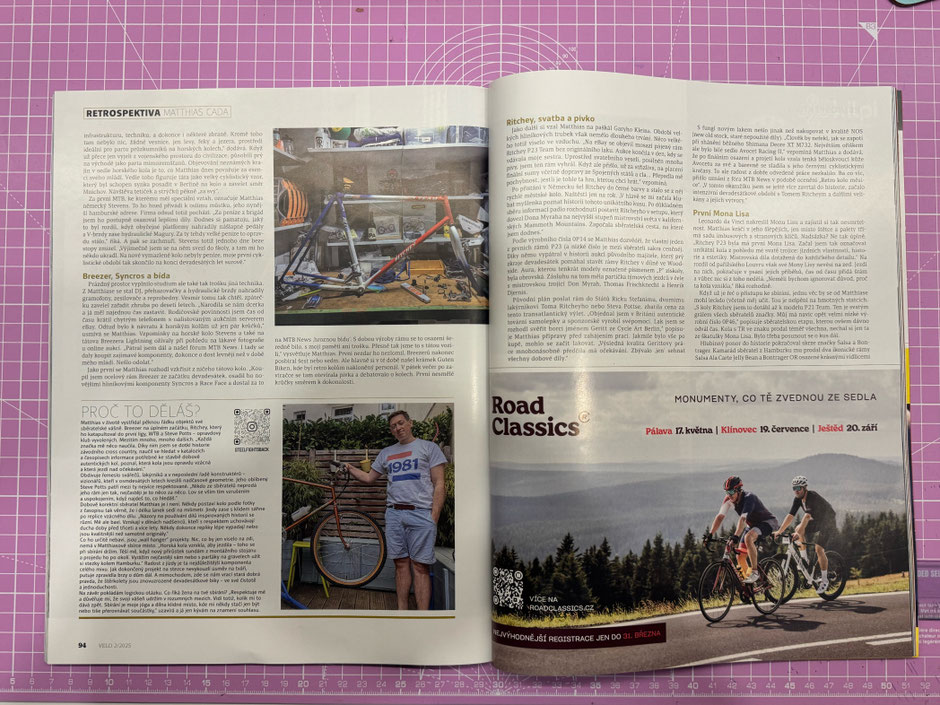
This is an interview with Matthias (Steelfightsback) and Lukas, printed in a Czech magazine in 2025 Feb. It´s on the story of my classic MTB collectors journey and the history of Steelfightsback. The original article is displayed in pictures in Czech. The text is translated to English. I also added some pictures as context to the text.
Feburary 2025 by Lukáš Jokl
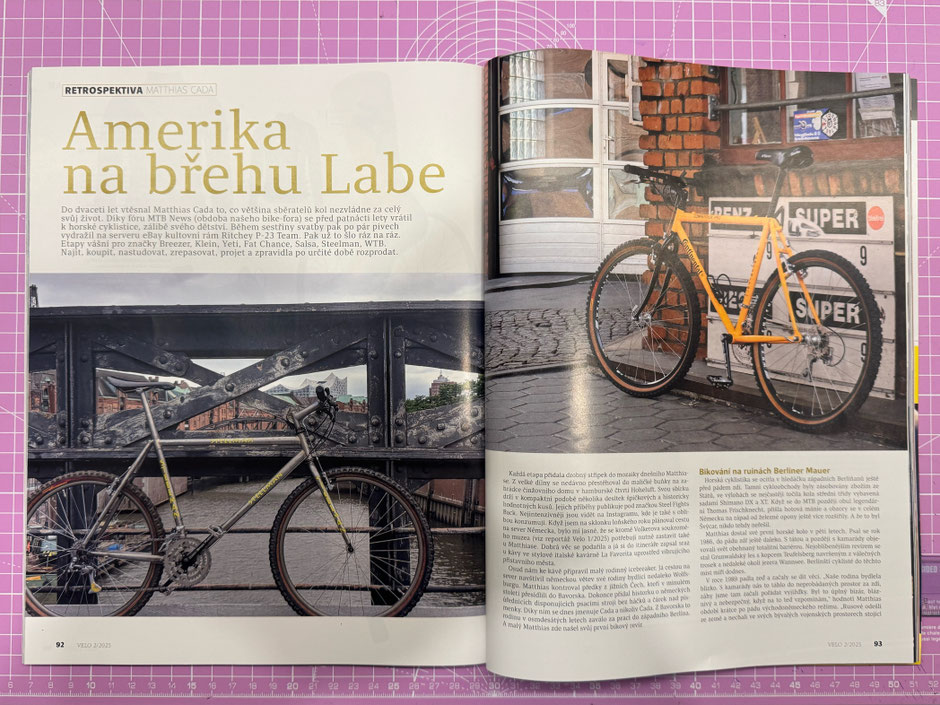
By the age of fourty, Matthias Cada had managed to accomplish what most collectors can’t achieve in a lifetime.
Thanks to the MTB News forum (https://www.mtb-news.de/forum/ , a German equivalent of retbike-forum), he rediscovered mountain biking—his childhood passion—some fifteen years ago. Then, during his sister’s wedding, after a few beers, he impulsively won an auction on eBay for a legendary Ritchey P-23 Team frame. That was the turning point. From then on, he dived headfirst into the worlds of Breezer, Klein, Yeti, Fat Chance, Salsa, Steelman, and WTB—finding, buying, researching, restoring, riding, and, more often than not, eventually selling.
Each phase of his passion added another piece to the puzzle of today’s Matthias. He recently downsized from a large workshop to a tiny garden shed behind an apartment building in Hamburg’s Hoheluft district.
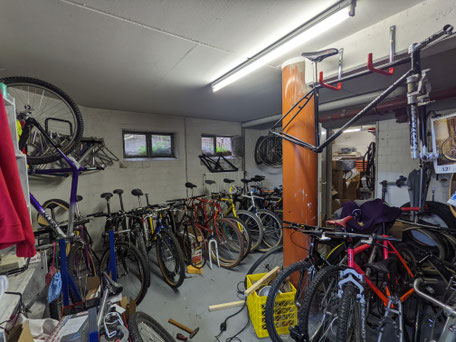
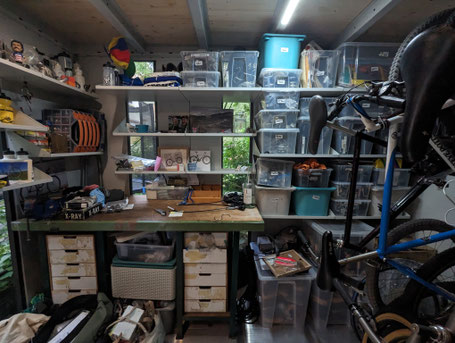
His collection is now a carefully curated selection of a few dozen high-end and historically significant bikes. He shares their stories under the name Steel Fights Back, which is most visible on Instagram— https://www.instagram.com/steelfightsback/ - where I, too, enjoy consuming his content. So when I planned a trip to northern Germany late last year, I knew that besides visiting Volker’s private museum - https://www.instagram.com/vintage_mtb_barn/ - , I absolutely had to stop by Matthias’ place as well. Luckily, everything worked out, and I penciled in a coffee meetup at the stylish Italian café La Favorita, right in the heart of Hamburg’s bustling port city.
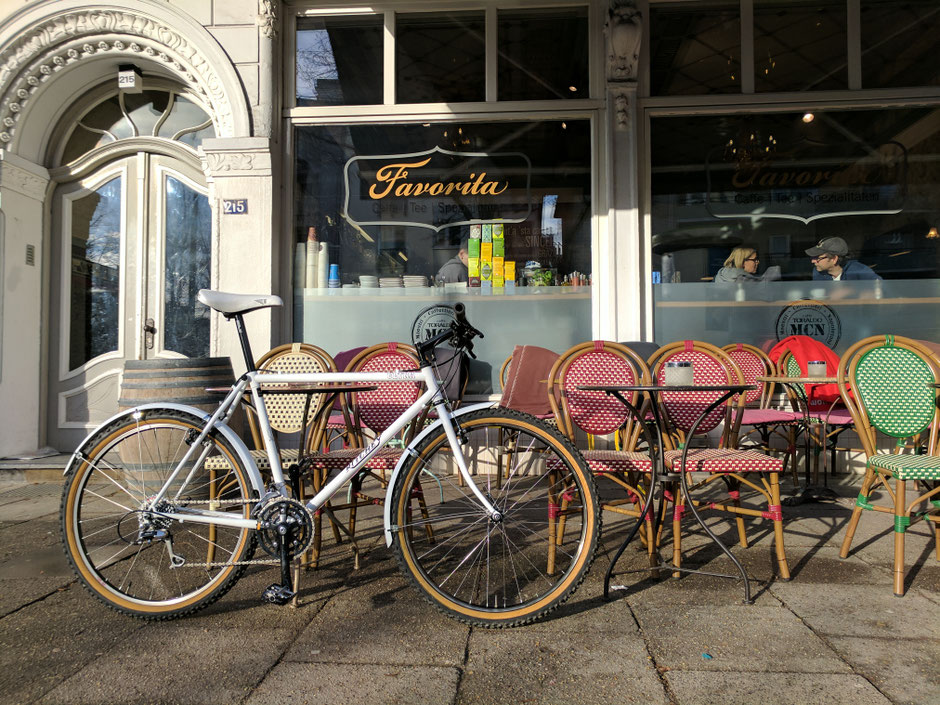
Fate even threw in a small family icebreaker to go with our coffee. On my way north, I had visited the German branch of my family living near Wolfsburg. Matthias countered with his own ancestry from South Bohemia, whose members relocated to Bavaria in the last century. He even shared a story about German bureaucrats working with typewriters that lacked Czech diacritical marks—hence why he is called Cada today, rather than Čada. In the 1980s, his family moved to West Berlin for work, and it was there that young Matthias discovered his first mountain biking playground.
Mountain Biking on the Ruins of the Berliner MaueR
Mountain biking caught the attention of West Berliners even before the Wall came down. Local bike shops were well-stocked with goods from the U.S., and mid-range bikes equipped with Shimano DX / XT groupsets were the most common sight in shop windows. When Thomas Frischknecht later got involved, the craze truly took off, broadening horizons across Germany west of the Iron Curtain. The fact that he was Swiss? Nobody cared back then.
Matthias got his first mountain bike at the age of five. It was 1986, and the fall of the Wall was still a long way off. With his dad, and later with friends, he explored a world enclosed by a totalitarian barrier. His favorite playground became the Grunewald Forest, home to Teufelsberg—a man-made hill built from wartime rubble—as well as the nearby shores of Wannsee Lake. Even today, Berlin’s cyclists flock to these areas.
Then, in 1989, the Wall fell, and things started happening fast. “Our family lived nearby. My friends and I were drawn to the unexplored spaces beyond the Wall, and before long, we started organising rides there. Looking back, it was totally surreal—crazy and dangerous,” Matthias recalls of those early post-DDR days. “The Russians left the country, abandoning their military bases with intact infrastructure, equipment, and even some weapons. Other than that, there was nothing—no villages, just forests, rivers, and lakes. It was a paradise for a group of young mountain bike explorers.” When they did finally ride out of the military zones and into civilization, they must have looked like a gang of extraterrestrials to the locals in the East.
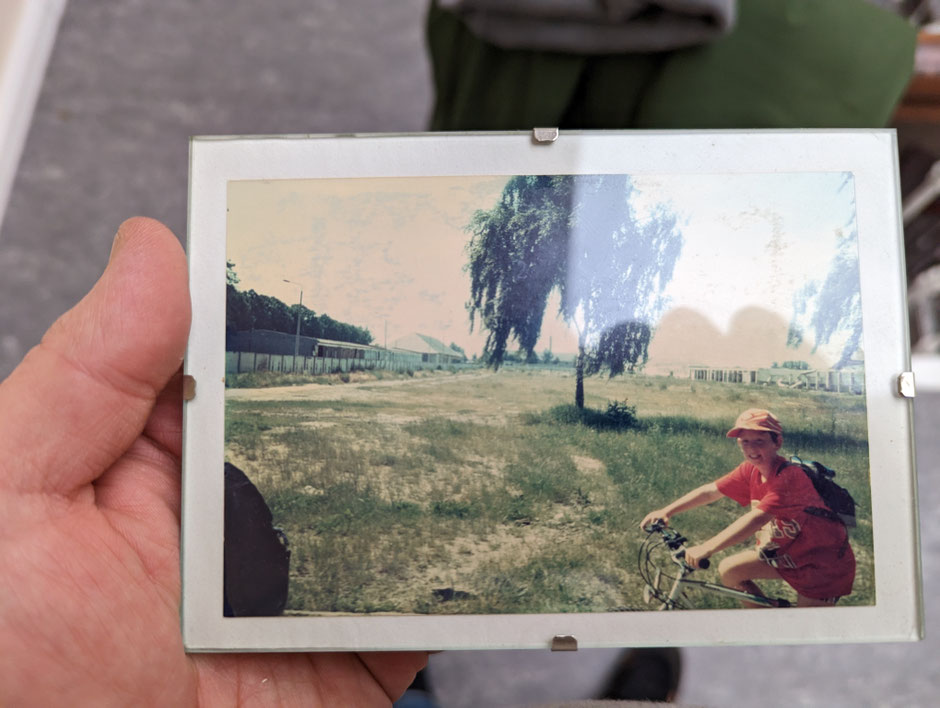
Exploring unknown landscapes from the saddle of a mountain bike is something Matthias now sees as the essence of his youth. Alongside that, his father remains a major cycling inspiration—a man who could set off from Berlin with his son and simply declare: “We’re heading to Munich.” A visit to uncles and aunts, all on their own steam.
The first MTB Matthias had a real connection with was a German-made Stevens. That naturally leads to an amusing connection with his current home in Hamburg—since that’s where the brand originates. “With money from part-time jobs, I gradually upgraded it with better components. I still remember how huge the difference was when I swapped basic platform pedals for clipless ones and replaced V-brakes with hydraulic Maguras. It was expensive back then, but totally worth it,” he says, before his expression darkens. The Stevens vanished one day without a trace. “For once, I rode it to school, and someone stole it. I couldn’t afford a new tricked-out bike, and just like that, my first cycling era came to a brutal end in the late ‘90s.”
Breezer, Syncros, and a Bit of a Beating
The void left behind was filled with studies—but also a completely different kind of technology. Matthias became a DJ, swapping derailleurs and hydraulic brakes for turntables, amplifiers, and speakers. The universe, however, had other plans and called for a shift in direction about a decade later. “Our daughter was born, and suddenly, I had time to pause. Parenthood came with moments of downtime, which I occasionally filled by browsing eBay on my smartphone. From there, it was just a short leap back to mountain bikes,” Matthias recalls with a smile. Memories of his old Stevens MTB and his father’s Breezer Lightning came flooding back as he scrolled through tempting auction listings. “I kept searching and eventually found the MTB News forum. They had great components for sale—often much cheaper than in my youth. Resistance was futile.”
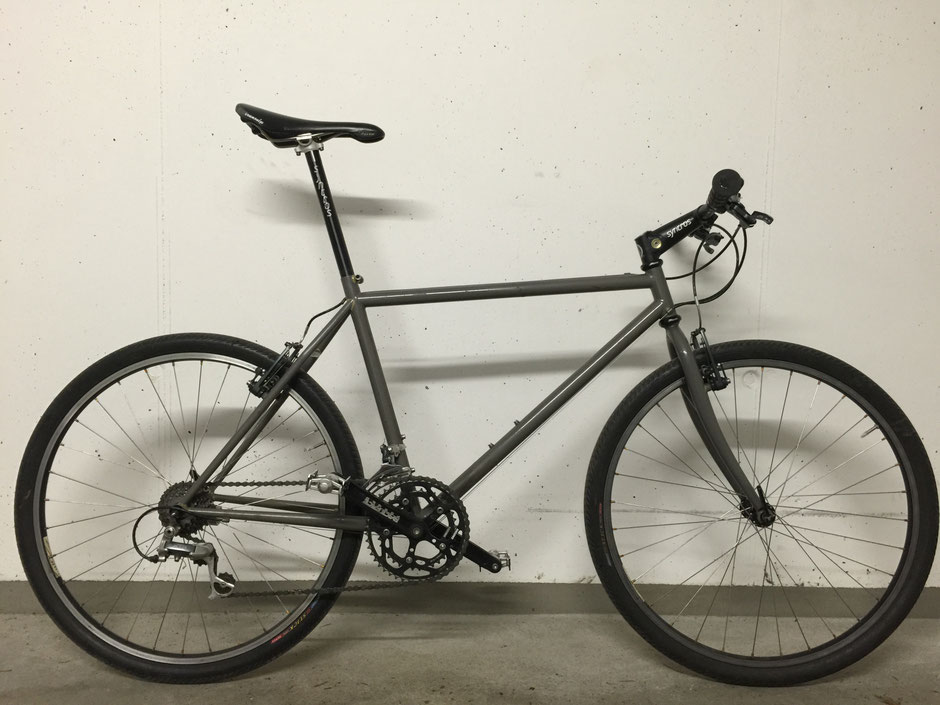
Matthias’ first project was to bring his father’s bike back to life. “I bought a steel Breezer frame from the early ‘90s and built it up with more modern aluminum components from Syncros and Race Face. When I posted it on MTB News, I got absolutely roasted for it. The build didn’t match the era of the frame at all—but to me, it was exactly how we wanted to ride it at this time,” he explains.
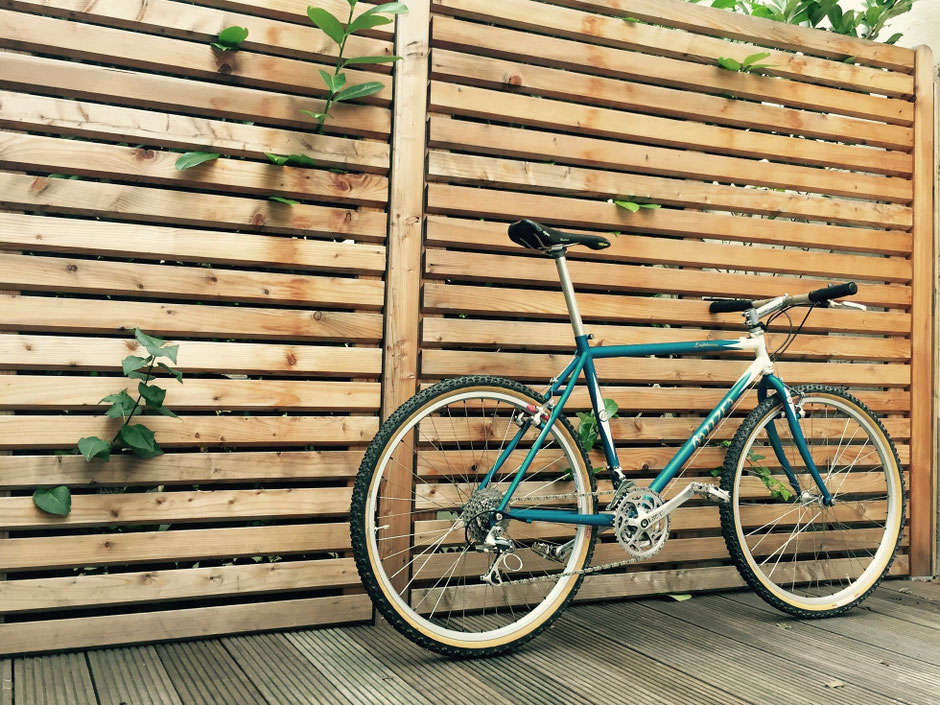
That first misstep didn’t deter him. In the end, he collected six or seven Breezers
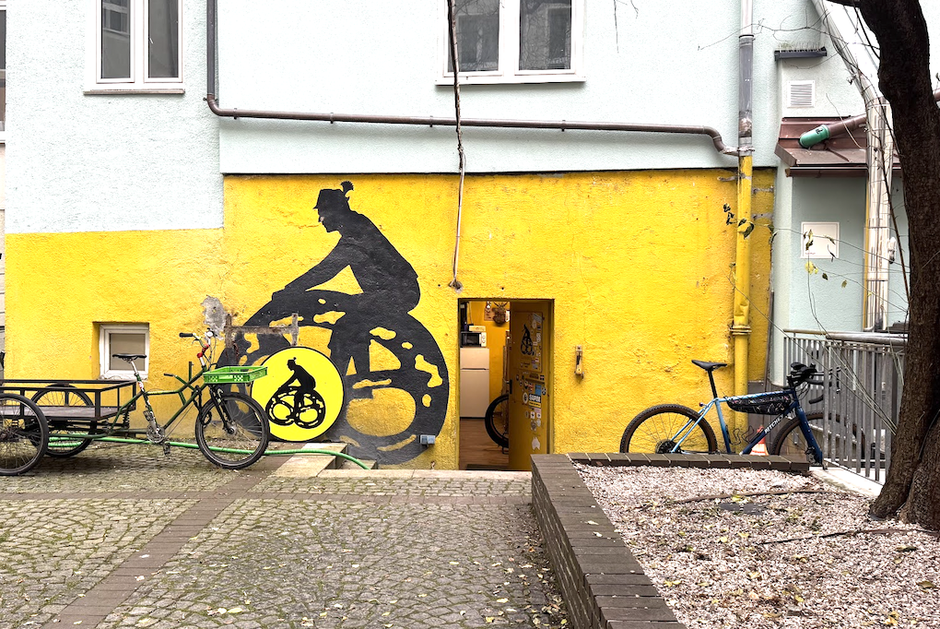
More importantly, around that time, he discovered a small bike shop with a staff that shared his love for retro bikes. On Friday nights, after closing time, the crew would crack open beers and talk bikes—a crucial first step on the path to perfection. This was Guten Biken in Munich - https://www.instagram.com/guten_biken/
Ritchey, a Wedding, and a Few Beers
Next, Matthias set his sights on Gary Klein. However, his fascination with oversized aluminum tubes didn’t last long—something bigger was looming on the horizon.
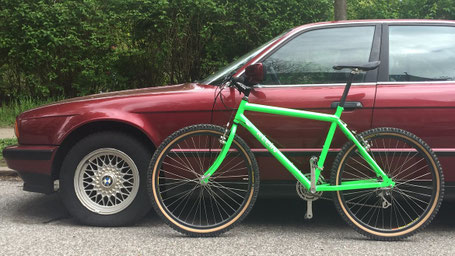
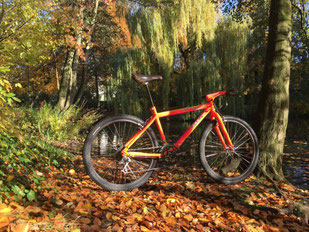
“A brass-brazed Ritchey P23 Team frame popped up on eBay, stripped of its original paint. The auction ended on the day of my sister’s wedding. In the midst of the celebration, after several beers, I ended up winning the frame. But when it came time to pay the final sum—shipping from the U.S. and import duties included—and I was stone-cold sober… I suddenly had doubts about whether this was the kind of game I wanted to play,” Matthias recalls.
on followed—his Ritchey was named Retro Bike of the Month on the MTB News forum. “At that moment, I dug even deeper into the history. That’s when my full-blown ‘90s phase with Tom Ritchey and
other legends truly began.”
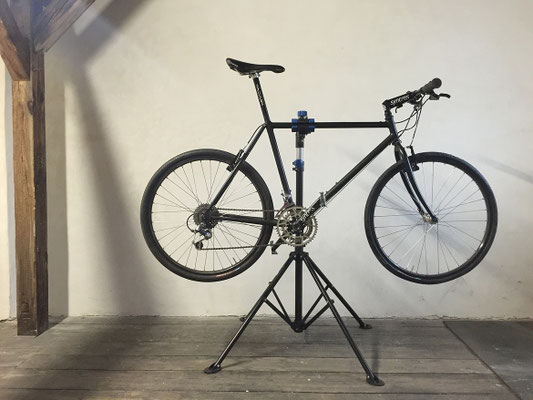
Once the Ritchey landed in Germany, he had it painted black and used it as a fast city bike challenging all road bikes on commutes.
Fortunately, that phase lasted only a year. “An idea started forming in my mind—I wanted to uncover the history of this unique piece. After a deep dive into research, I made the decision to restore the Ritchey to the exact setup that Don Myrah rode to victory at the World Championships in California’s Mammoth Mountains. That marked the beginning of my collector’s journey—one that I’m still on today.
Through the serial number 0P14, Matthias discovered that he owned one of the very first P23 frames—a low number, which is a huge deal among collectors. That number led him to track down the bike’s original owner through old auction records. Apparently, this person had worked in the Ritchey workshop in Woodside in the early ‘90s, helping to build the frames himself. The aura surrounding Ritchey’s P-series bikes at the time was immense—thanks in large part to a legendary team of riders, led by World Championship-winning trio Don Myrah, Thomas Frischknecht, and Henrik Djernis.
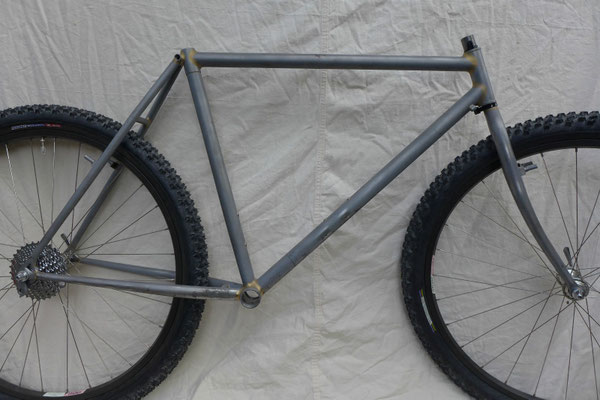
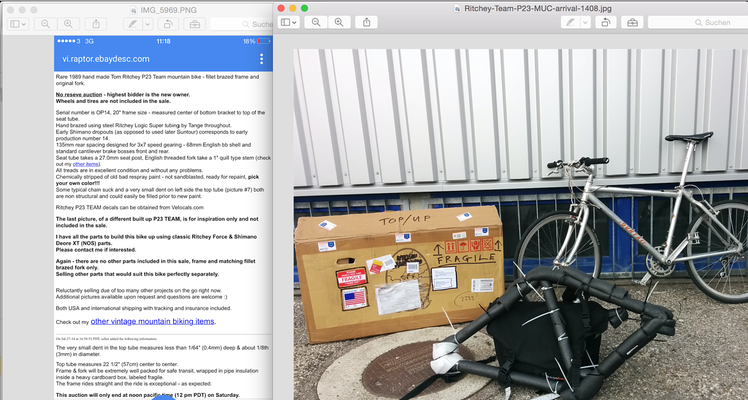
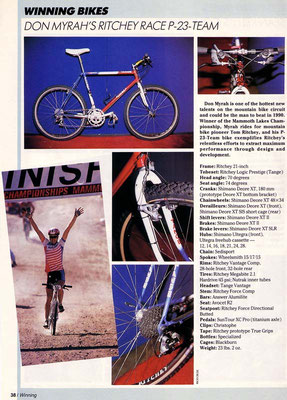
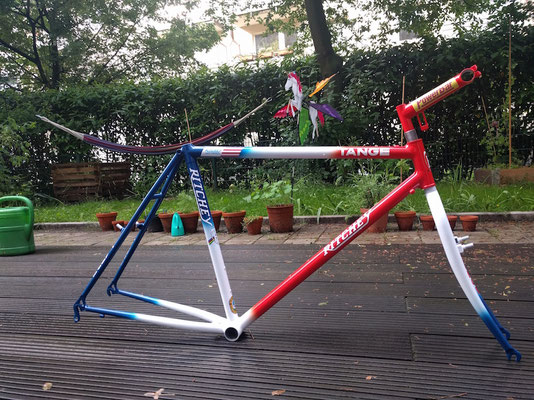
Matthias originally planned to send the frame back to the U.S. for a paint job by Rick Stefani, Tom Ritchey’s go-to painter. However, the cost of that transatlantic adventure quickly put an end to that idea. “I ordered authentic decals from the UK and arranged for Gerit at Cycle Art Berlin to do the paintwork. The only thing left was to reproduce the sponsor decals using enlarged scans from old magazines, and then we were good to go,” he says. Once everything was in place, it was time to paint. “The final quality of Geritt’s work far exceeded my expectations. All that remained was the ‘small’ task of tracking down period-correct components.”
With a fresh new coat of paint, there was only one way to go—NOS (New Old Stock) parts. “You wouldn’t believe how much effort it took to find a basic Shimano Deore XT M732 group. But the biggest
headache was tracking down a white Avocet Racing II saddle,” Matthias recalls. Once the build was complete and the bike was finally ridden, the thin, pristine white leather of the Avocet quickly
adapted to his black cycling shorts. But that didn’t spoil the satisfaction of a job well done. In fact, recognition so.
LINK TO THE DON MYRAH BIKE
The First Mona Lisa
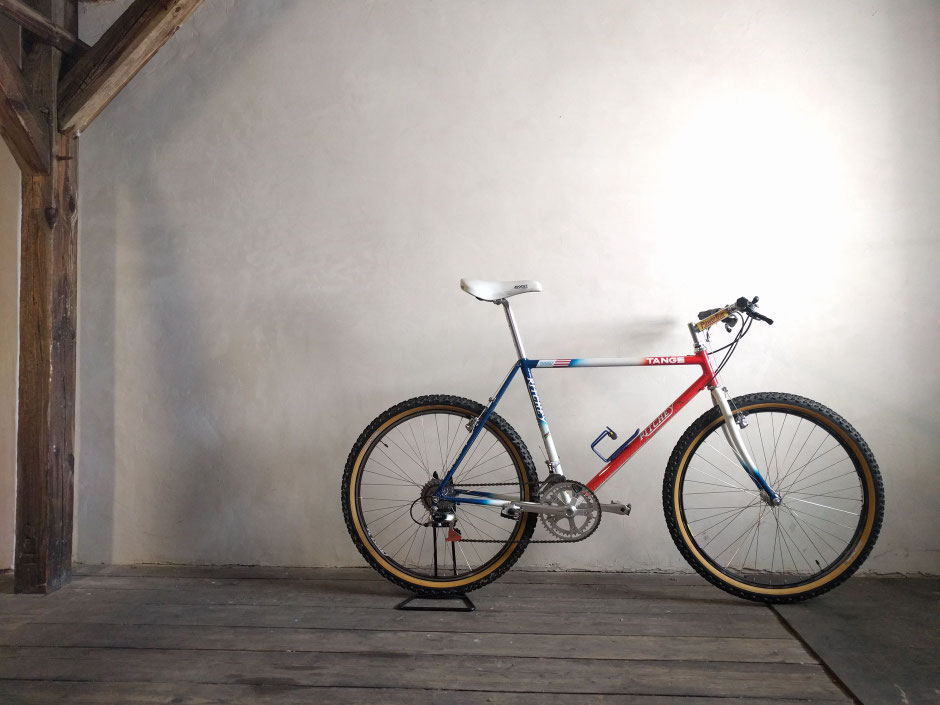
Leonardo da Vinci painted the Mona Lisa and secured his immortality. Matthias follows in his footsteps—except instead of brushes and a palette, he wields hex keys and wrenches. An exaggeration? Not entirely. “The Ritchey P23 was my first Mona Lisa (LINK). That’s what I started calling truly exceptional bikes based on my own holy trinity: ride quality, history, and aesthetics—masterpieces refined down to the last detail,” he explains.
Unlike the Louvre in Paris, however, Matthias doesn’t hang his Mona Lisas on a wall. He rides them. He continues writing their stories, occasionally adding a new scratch here and there—and he couldn’t care less. “We shouldn’t forget the reason these bikes were built in the first place,” he says with conviction.
When it comes to collecting, there’s one lesson many—including myself—could learn from Matthias: not being overly attached to material possessions. “With Ritchey bikes, I reached the pinnacle—the P21 Team. That’s the holy grail for every Ritchey collector. Mine even had an incredibly low serial number: 0P46,” he recalls. But that chapter is long gone. He eventually sold almost all of his TR-branded bikes, keeping only those that met his Mona Lisa standard. It was time to move forward.
SteelFightsBacK
His deep dive into history continued with Salsa and Bontrager. A fellow collector from Hamburg sold him two iconic frames—a Salsa Jelly Bean and a Bontrager OR, both equipped with stunning Bontrager Switchblade forks. “The first had a sloping top tube, the second a short head tube with a horizontal top tube. While building them up, I compared their geometries, thought about the design philosophies of Ross Shafer and Keith Bontrager—it felt like discovering entirely new worlds,” Matthias reminisces.
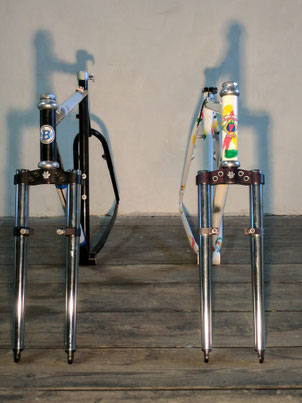
What fascinated him most about these frames was their abundance of custom details and the air of mystery surrounding them. “Tom Ritchey documented everything in catalogs. But uncovering the work
of founding fathers like Ross, Keith, and others takes much more effort. The harder the search, the greater the satisfaction when you finally connect the dots—and the more powerful the stories
become.”
LINK TO THE BONTRAGER AND SALSA
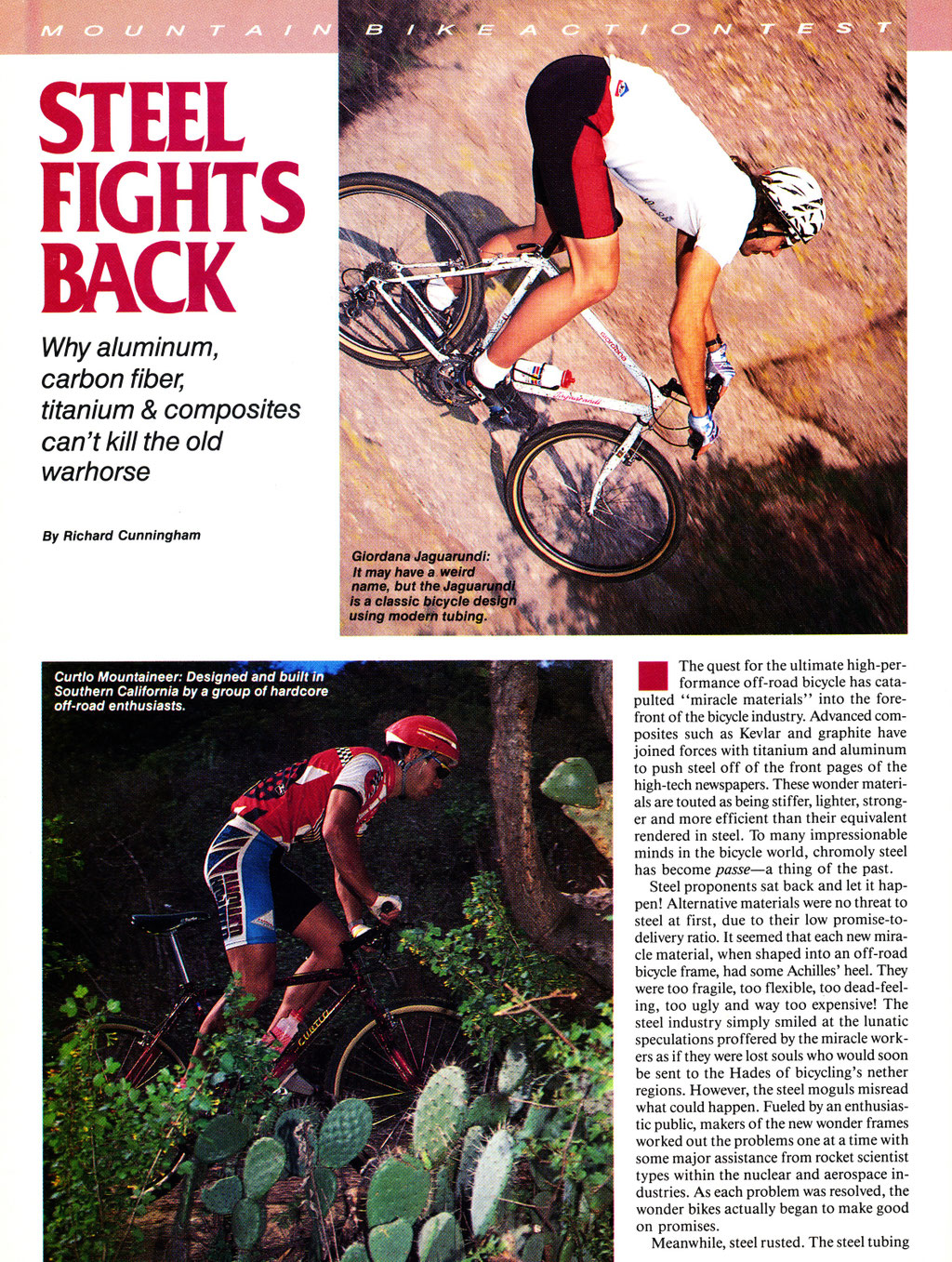
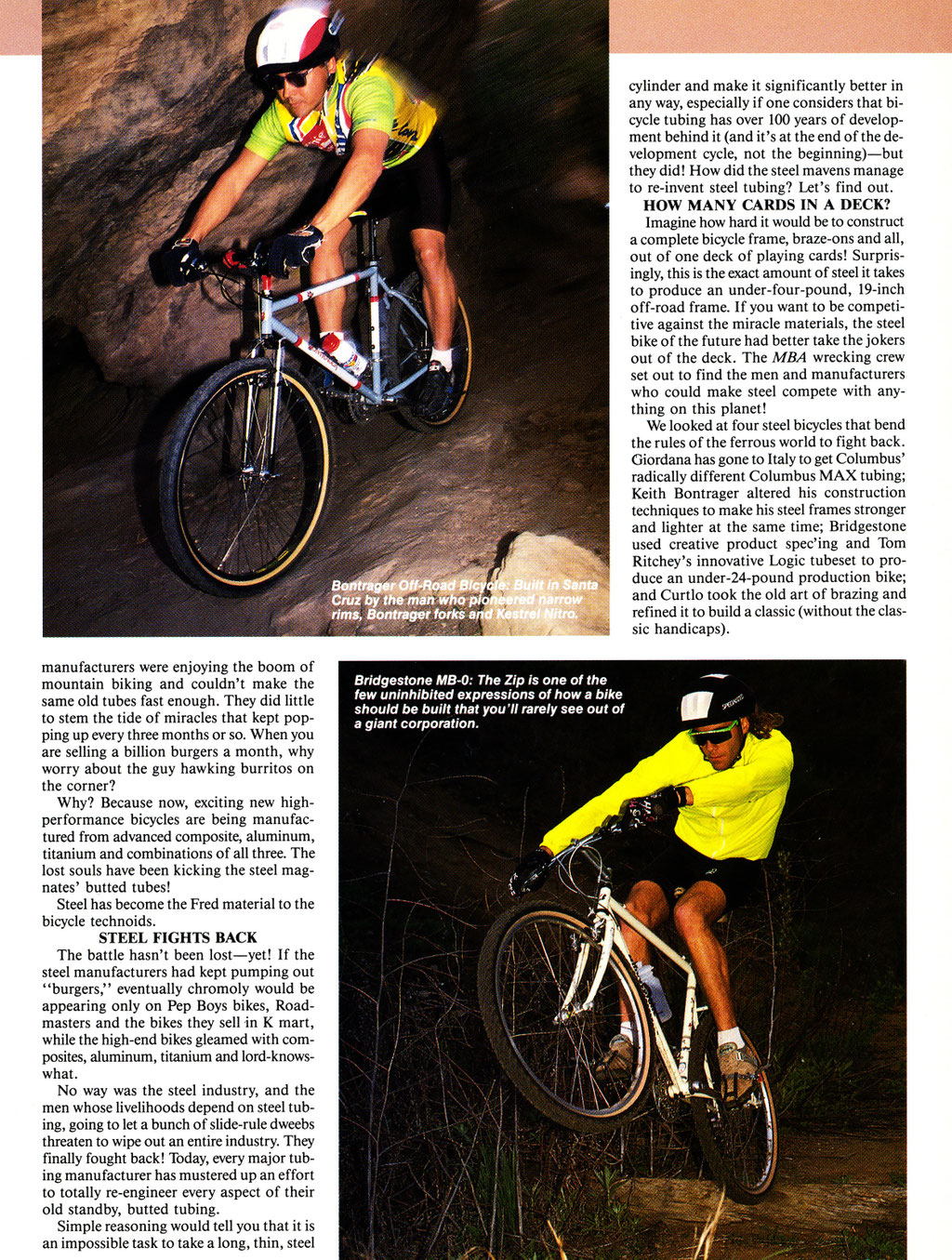
While researching his latest additions, Matthias stumbled upon a Mountain Bike Action article titled Steel Fights Back. Published in June 1990, it focused on the Bontrager Off-Road and the vision of its creator. “Keith Bontrager believes that steel has a future in mountain bike design and that outdated manufacturing methods—not the material itself—are what need to change,” the article stated. In a way, today’s world has proven Keith right. Steel is alive and evolving, and it hardly matters that it has shifted from a mainstream choice to an exclusive material cherished by those who appreciate true craftsmanship.
For Matthias, this discovery opened the door to the world of 1980s garage frame builders—completely different approaches to frame construction, pieces of rare history that you wouldn’t just stumble upon anywhere. He began trading with collectors in the U.S., bringing numerous unique bikes to Europe—sometimes at painfully high prices. “The guys in California know all too well how rare iconic American bikes are over here. They weren’t shy about charging a premium, and honestly, I rarely had the willpower to say no,” he admits with a grin.
The birth years
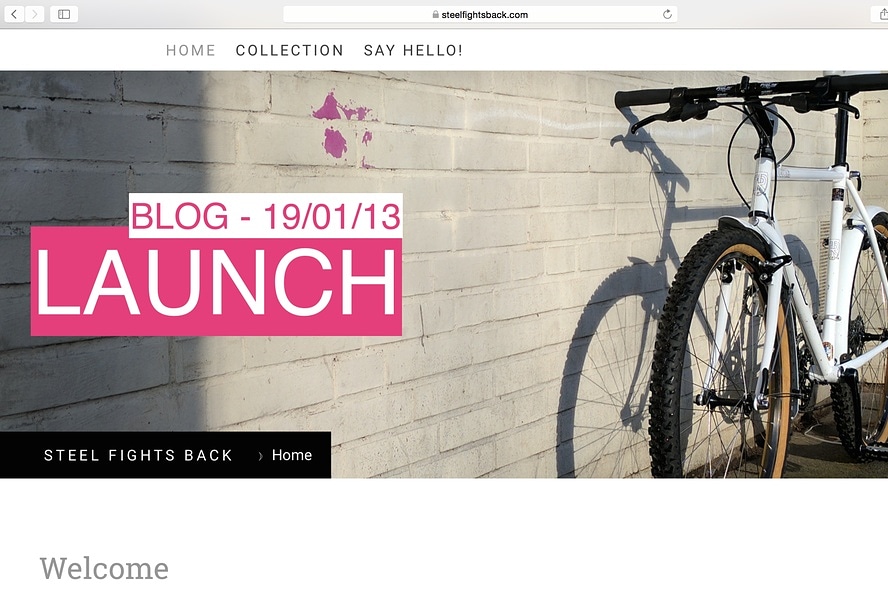
As he got his hands on more and more remarkable bikes with rich histories, he felt the urge to share beyond just the MTB News forum. He remembered the Steel Fights Back article, drew on his skills as a professional marketer, and within three years, built a brand of the same name. It started as a website and later expanded to Instagram—bringing an entirely new dimension to his collecting. “The moment I began publishing, offers for legendary bikes started pouring in. Between 2017 and 2019, my world sped up at a crazy pace. And then, Oskar came into our lives.”
Matthias and his wife welcomed their second child, a baby boy named Oskar, who was born with a genetic condition they hadn’t known about. But once he was there, they were determined to make his world the best possible place—even if only for a limited time. “I worked incredibly hard—spending my days at a marketing agency and my evenings at home. When the apartment finally fell silent at night, I would retreat to my workshop, crack open a beer, and build bikes. That’s what kept me going,” he shares openly.
During that time, his website exploded with stories of newly completed builds. “Most families never experience having a child like Oskar, but those eighteen months with him gave us so much. We learned to appreciate the simplest things—like just being able to ride bikes together as a family. Movement has become one of the ways we stay healthy, both physically and mentally.”
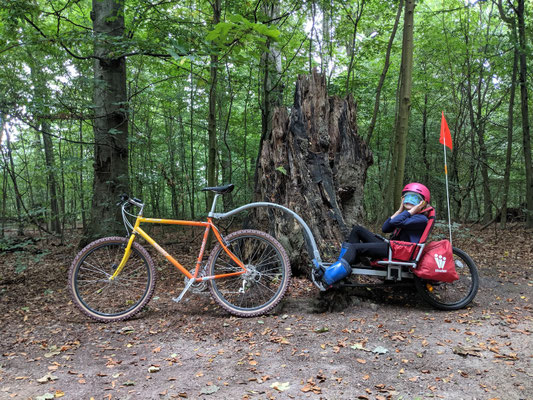
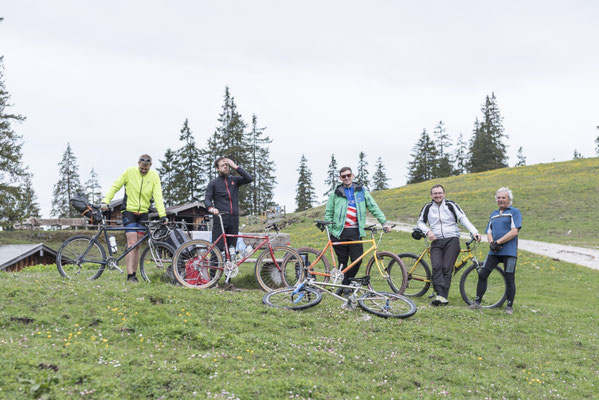
Riding the Plexus in the Alpes and with my little #1
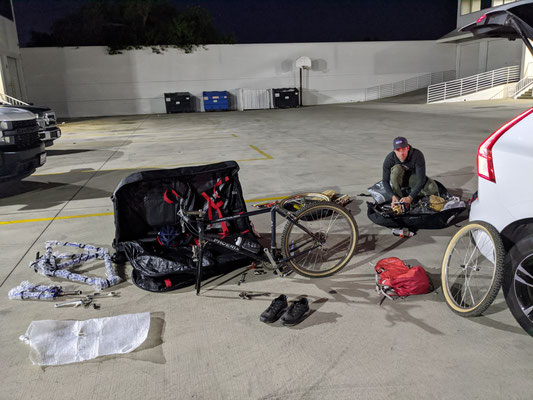
The COVID-19 pandemic turned the world upside down, and at its onset, Matthias experienced his own share of pandemic chaos. He set off for the U.S. on a pilgrimage to the sacred grounds of mountain biking. “A friend and I landed in California and immediately headed for Mount Tamalpais. When we returned to civilization, we heard Donald Trump on TV announcing a travel ban. That meant packing our bags right away and flying back to Germany within 24 hours,” he recalls.
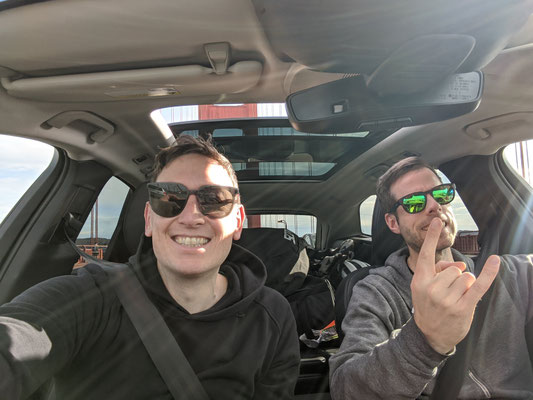
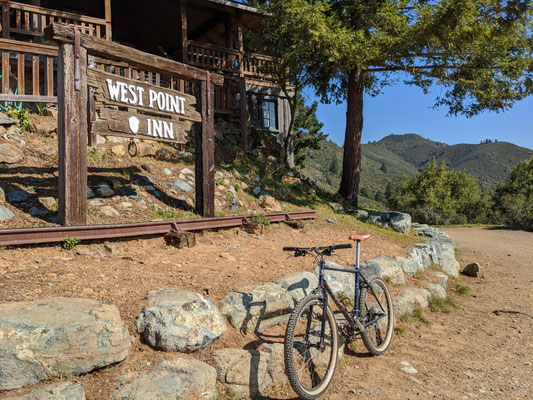
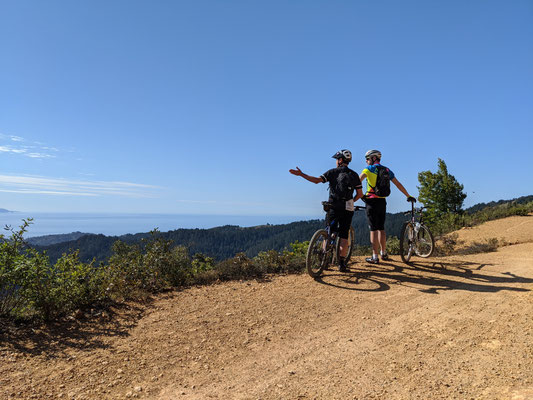
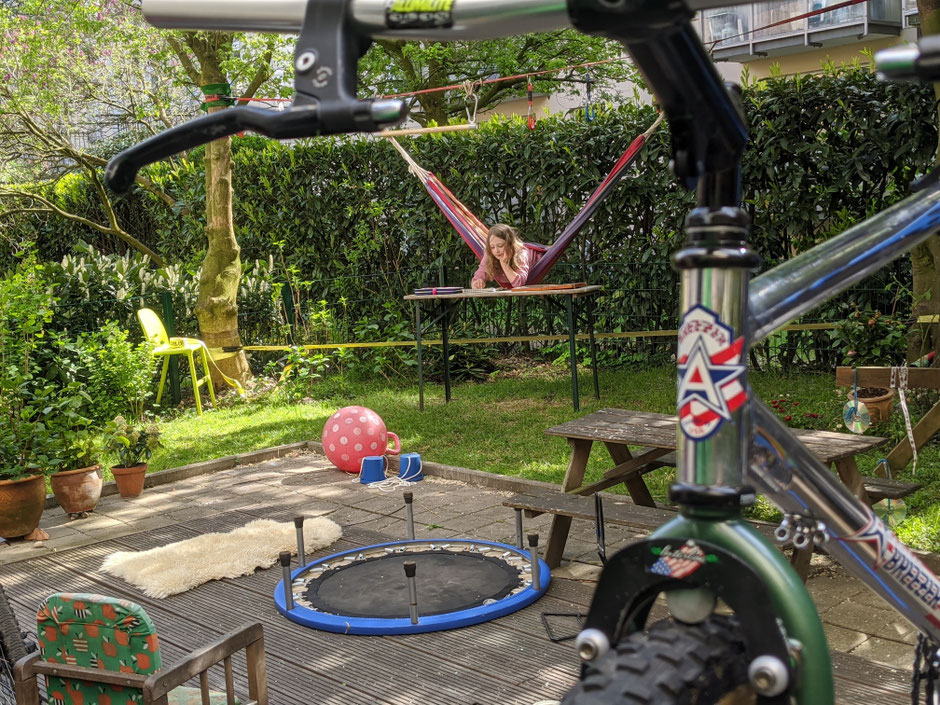
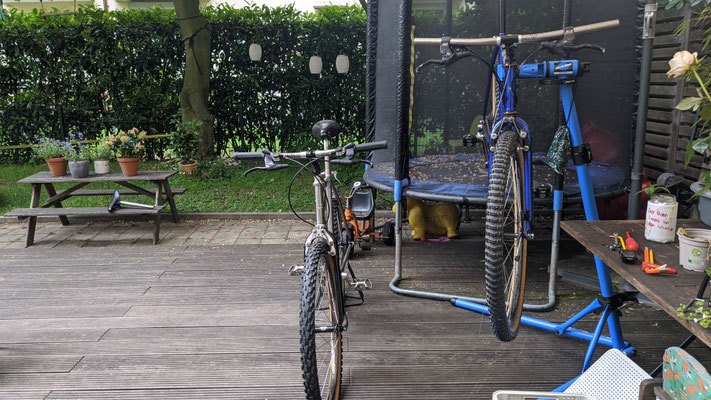
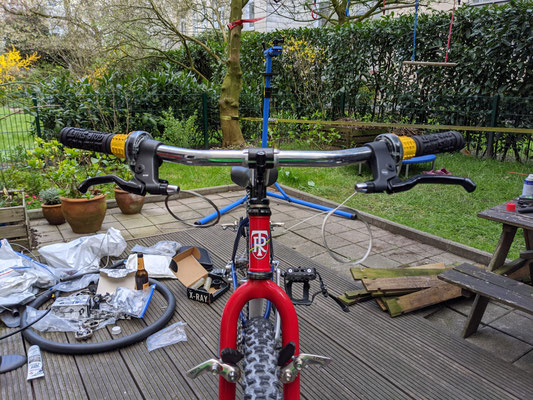
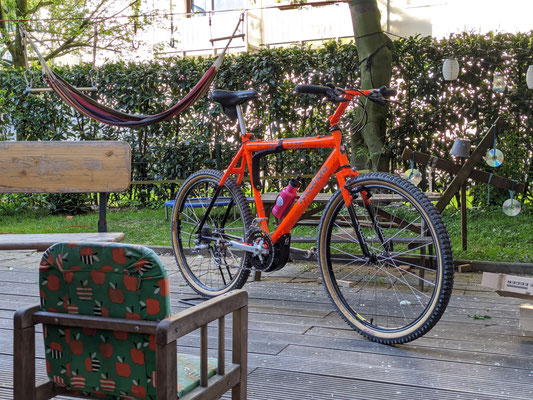
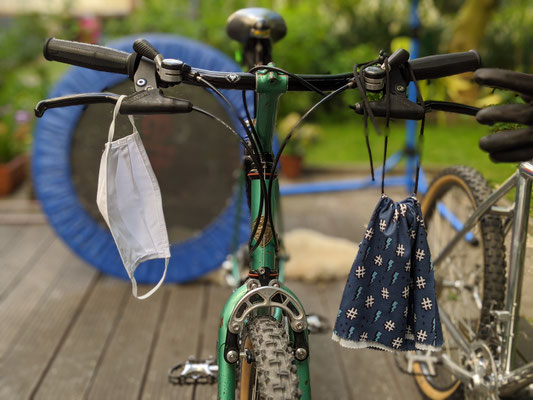
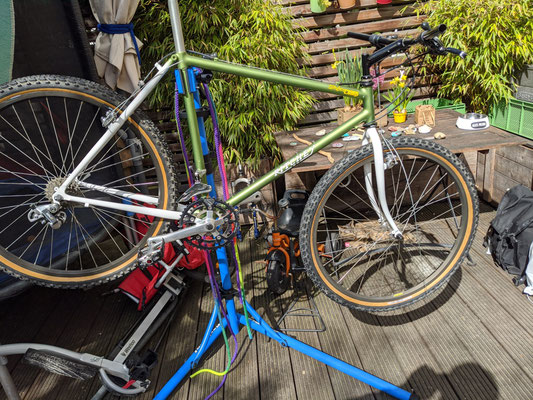
Lockdown in The vintage MTB Garden (Apr-May 2020)
The subsequent lockdown period played out in his own unique way—partly at the workstand, partly in the online world. “I was constantly running back and forth between our apartment and my workshop with a full backpack. I had plenty to work with—boxes full of frames and components. Every weekend, I built a new bike, took tons of photos, and shared the stories on Instagram.”
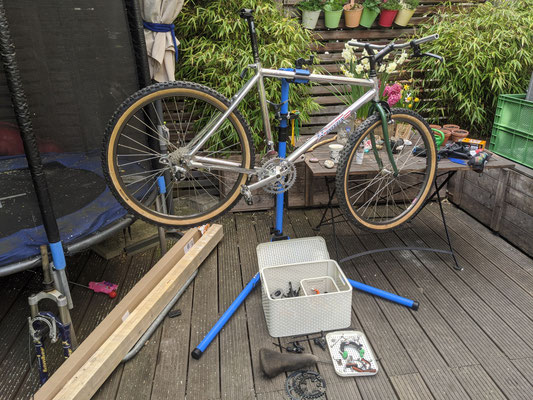
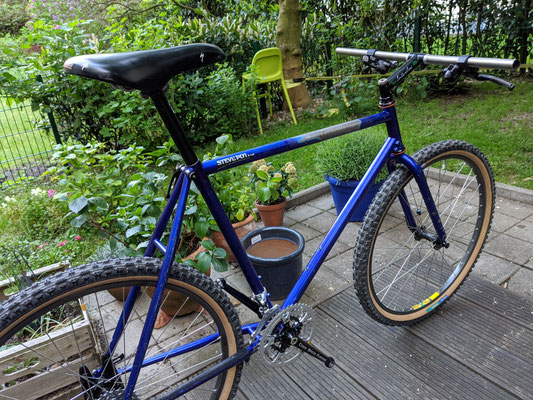
WTB, Steve Potts… and What’s Next?
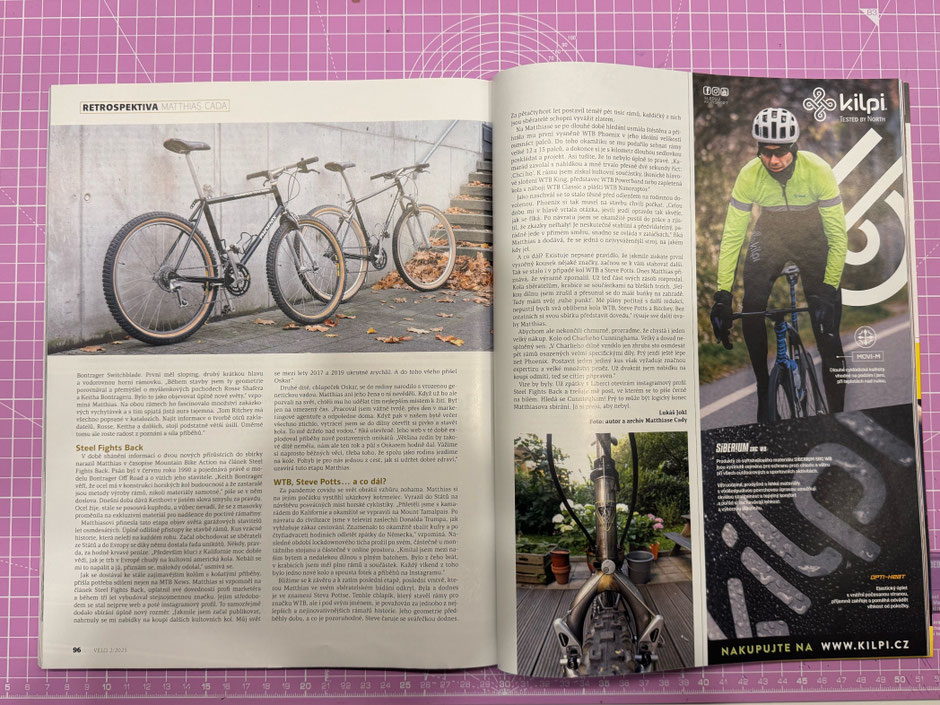
Linkt to the shown 1993 Phoenix SE + The shown WTB 29" Phoenix is not yet on the site
And so, we arrive at the latest chapter in Matthias’ collecting journey—one that continues to this day. This era has been defined by Steve Potts, a man who built frames for WTB and under his own name, and who is considered one of the greatest and most innovative frame builders in history. His geometries were ahead of their time, and what’s remarkable is that Steve is still welding frames today. In over 45 years, he has built fewer than 5,000 frames—each one so coveted that collectors would trade gold for them.
After years of searching, Matthias’ patience finally paid off—he landed his first dream WTB Phoenix in his ideal size, 18 inches. Until then, he had managed to find 12- and 15-inch frames and even built them up with comically long seatposts, but, as you might guess, that wasn’t quite the real deal. “A friend called with an offer, and it took me exactly two seconds to say, ‘I’ll take it.’ The frame came with legendary components—an iconic WTB King headset, a WTB Powerband stem, and hand-built wheels with WTB Classic hubs wrapped in WTB Nanoraptor tires.”
Of course, fate had a sense of humor—the Phoenix arrived just before Matthias left for a family vacation. So, the build had to wait. “The whole time, one question was nagging me—does it really ride as well as people say? The moment we got back, I got to work, and sure enough—the rumors were true! It’s incredibly stable and predictable, tracks straight like a dream, and carves through corners effortlessly,” he says, adding that it’s the most balanced bike he has ever ridden.
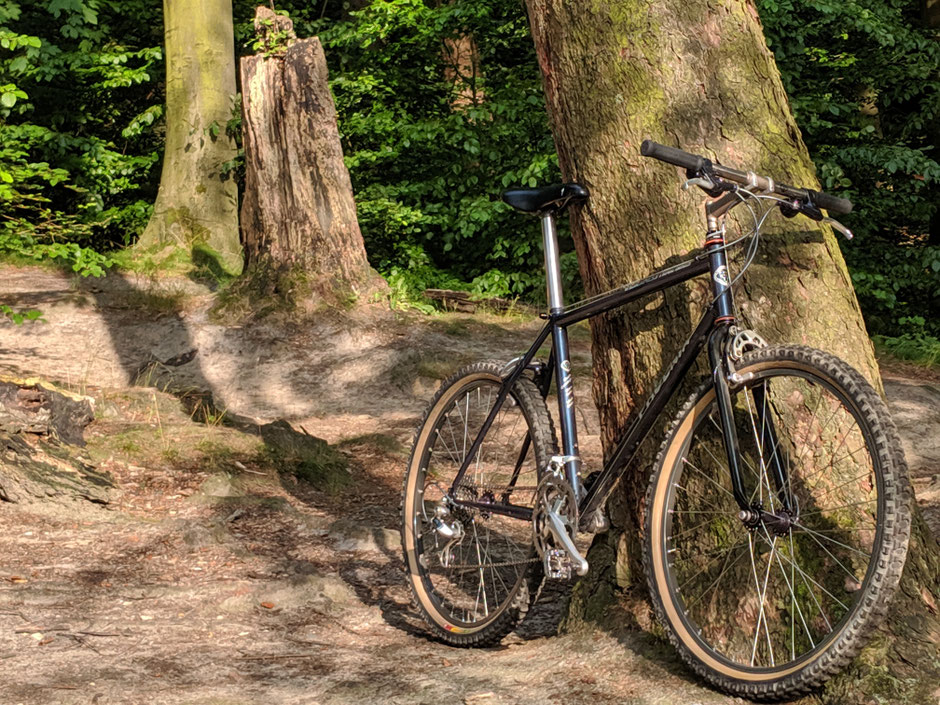
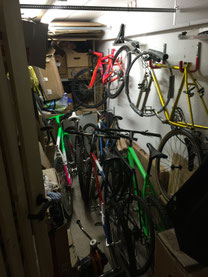
There’s an unwritten rule in collecting: once you acquire your first dream piece from a brand, more of them start finding their way to you. That’s exactly what happened with WTB and Steve Potts bikes. Today, Matthias admits that he has slowed down significantly. He has already sold off part of his collection—bikes to fellow collectors, boxes of components at Hamburg’s flea markets. “I gave up my big workshop and moved into a small shed in the garden. This is my ‘Ruhe Punkt’—my place of peace. My plans involve further downsizing, but I would never let go of my favorite WTB, Steve Potts, or Ritchey bikes. I can imagine my collection without the rest,” he reflects.
But let’s not end on a somber note—Matthias is also planning a major acquisition. A bike from Charlie Cunningham—his biggest, yet still unfulfilled dream. “Charlie’s workshop produced only about 185 frames, all built with incredibly specific components. They’re rumored to ride even better than the Phoenix. But assembling one requires serious expertise and a lot of money. I’ve already turned down two purchase offers—this time, I feel ready.”
The vision is clear. Back in Liberec, I open the Steel Fights Back Instagram profile and get hit with a post that spells it out in black and white: Looking for a Cunningham! It’s said that this could be the logical conclusion to Matthias’ collecting journey. But I sincerely hope it won’t be.
Selected influential Bikes in the magazine
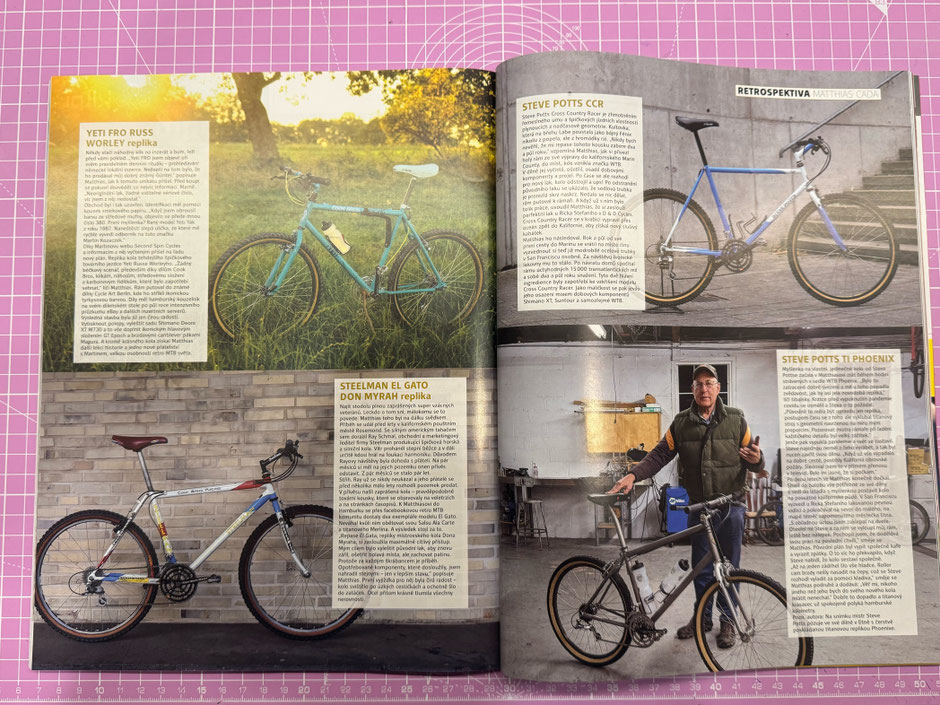
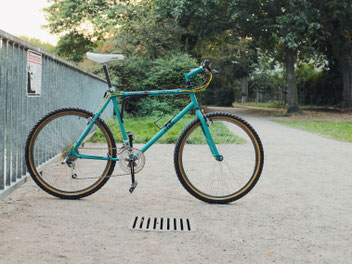
YETI FRO RUSS – Worley Replica
I never would have imagined that I would one day own this bike. The Yeti FRO was always one of those legendary bikes that existed only in magazines and dreams.
This particular frame is a replica of the Worley Yeti, built by Russ for Matthias. When the frame arrived, it was initially unclear whether it was truly a Yeti. Only after careful inspection and comparison with known originals did its authenticity become evident.
The frame geometry, welds, and details correspond to early Yeti FRO models from around 1987. The frame was later completed with period-correct components, many of which were sourced through long searches and exchanges within the vintage MTB community.
Special attention was paid to authentic finishes and decals, including a custom paint job inspired by original Yeti colorways. The result is a faithful reconstruction of a bike that represents a defining moment in early mountain bike history.
STEELMAN EL GATO – Don Myrah Replica
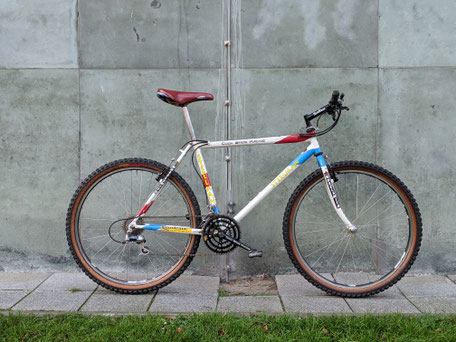
I have always been fascinated by bikes from the early days of mountain biking. When I first saw the Steelman El Gato, I immediately knew this was something special.
The original bike was designed and built for Don Myrah and stood out due to its progressive geometry and attention to detail. This replica was created as an homage to that original concept.
The frame was built using steel tubing appropriate to the era, with geometry closely matching the original. Components were selected with great care, prioritizing period correctness over modern performance.
The goal was not to create a perfect museum piece, but a rideable tribute that captures the spirit and innovation of the original El Gato. The finished bike reflects both the craftsmanship of Steelman and the experimental mindset of early mountain biking.
STEVE POTTS CCR
Steve Potts’ Cross Country Racer is a milestone in the development of steel mountain bike frames. Known for his precise craftsmanship and deep understanding of riding dynamics, Potts created frames that were both durable and highly responsive.
This particular CCR frame features custom geometry and beautifully executed fillet brazing. The bike was built using a carefully curated mix of classic components that match the frame’s character and era.
The CCR was designed for demanding cross-country riding, offering stability, efficiency, and comfort over long distances. Even today, it remains a benchmark for handcrafted steel MTB frames.
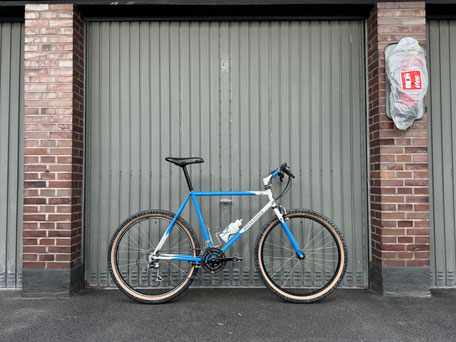
STEVE POTTS TI PHOENIX
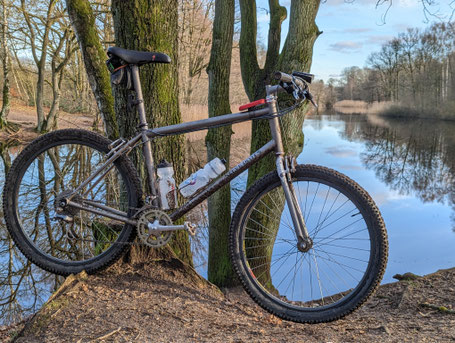
The Titanium Phoenix represents Steve Potts’ exploration of titanium as a frame material. Light, resilient, and corrosion-resistant, titanium allowed Potts to push the boundaries of ride quality and durability.
This frame combines clean welds with timeless geometry, resulting in a bike that feels both lively and stable on the trail. The build stays true to the original concept, featuring high-end components from the era in which the frame was created.
The Phoenix is not only a technical achievement, but also a reflection of Potts’ philosophy: building bikes that are meant to be ridden hard and appreciated for decades.
THIS BIKE IS NOT YET ON THE PAGE